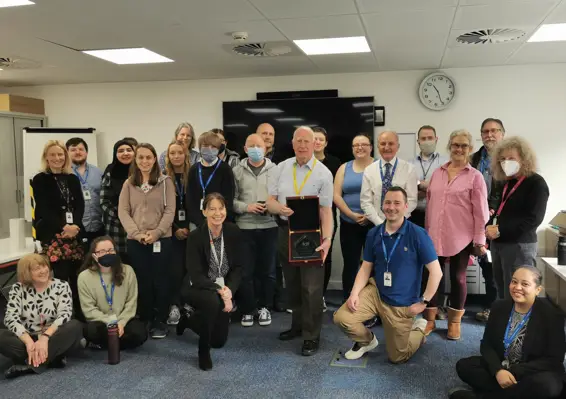
In 1967, you left a safe job at Cambridge to start something from scratch. Looking back, how do you know when a career risk is worth taking and how do we stay confident when stepping into the unknown?
The chance to set up a microscopy laboratory from scratch, with a generous budget and complete control over the equipment, was far too good to pass up. It felt like winning the jackpot. Sixty years ago, academics often spurned industry, but I could see how technology could support manufacturing. I was given such a free hand that I was even able to include a precision lathe in the equipment we installed, allowing us to fabricate bespoke components for our microscopes and sampling devices. Those were the days when we were expected to be able to take a soldering iron to our equipment - and frequently did so!
A risk is worth taking when it aligns with your curiosity and temperament. If you have the underlying capability, then it is probably the right step. A comfortable life does not have to be a boring one - it comes from having the confidence to see change as an opportunity rather than a threat.
Your ‘mobile lab’ microscopy service from a van has inspired many with your entrepreneurial spirit. How would you encourage colleagues within RSSL to step forward with new or better ideas?
My entrepreneurial adventures were never grand schemes. The mobile microscopy lab in a van, for example, came from recognising a need and being willing to try something to meet it.
I would encourage colleagues to do the same: notice things, stay curious and don’t be afraid to explore the boundaries a little. I have three principles of operation:
- If your knuckles are not rapped occasionally, you are not exploring the limits of your authority
- If you think that you are not going to like the answer, don’t ask the question
- It is easier to obtain forgiveness than permission.
They sound subversive on the face of it, but they are grounded in a commitment to doing the best you can based on your understanding of the needs of the business. Most innovation comes from people who say, ‘I wonder if there’s a better way?’ The first step is simply giving yourself permission to try. From there, it is about finding the most effective way to deliver improvements.
With a background that includes a book introduction from King Charles, you clearly excel at connecting across all levels. What are the key networking lessons we can learn from you on navigating and influencing senior circles?
Any success I have had in that area has been more accidental than strategic. I have never ‘networked’ in the modern sense. What I have learned to do is listen.
Having worked with night shift operatives on food production lines, thatchers on the roofs of historic buildings and - when project managing the introduction of Quorn to market - alongside managing and technical directors as well as production line staff from several companies, I have interacted with a wide spectrum of people, from cleaners to managing directors. The important thing is to listen to everyone with an open mind, treat all with respect and communicate clearly as an equal. We all have something of value to bring to every exchange.
How did you manage during your career to build up your resilience? How can your generation help us through an increasingly volatile world?
I had an unfair advantage. I grew up in a time of chaos (WWII). I witnessed a daylight bombing raid on Reading and my father put a few anti-aircraft rounds through the offices at the top of the Huntley & Palmer biscuit factory. A child tends to assume that what is happening around them is normal.
Very early in my career, as a first aider, I was the first to arrive at a chemical store explosion that killed one man and blew another through a window. Experiences like those put the more mundane problems of life into perspective.
‘Keep Calm and Carry On’ was a valuable wartime slogan and it remains true to this day.