USP Chapter 60 update: Burkholderia cepacia testing changes for 2026

BY DR TIM SANDLE | PHARMACEUTICAL MICROBIOLOGY AND CONTAMINATION CONTROL EXPERT
3rd JULY


The United States Pharmacopeia’s (USP) Chapter 〈60〉 Microbiological Examination of Nonsterile Products - Tests for Burkholderia cepacia Complex1 remains one of the most important compendial microbiology chapters for companies manufacturing aqueous, inhaled, nasal, cutaneous or other microbiologically vulnerable nonsterile products.


The current official version, effective 1 June 20262, does not radically redesign the method - rather, it tightens the chapter through clarifications, better definition of culture media, strengthened method suitability expectations and greater emphasis on confirmatory identification. For microbiologists, this means the chapter has become more inspection-defensible, standardised and explicit about what constitutes a fit-for-purpose Bcc test.


Click the button below and get all future Tim Sandle updates delivered directly to your inbox

The key changes are set out below: 


Area Change Regulatory significance
New/modified section

Introduction of ‘Recommended Culture Media’ section with formal

 compositions (buffer, SCDB, BCSA, etc.) explicitly described.

Improves standardisation and reproducibility. Allows

alternative media but requires demonstrated equivalence.

Status of media section Clearly labelled as informational only.

Reinforces flexibility under a QRM framework while

maintaining expectation for method suitability.

Method suitability

Stronger wording on demonstrating ability to detect Bcc in the

presence of product; explicit requirement to reassess when product

or method changes.

Aligns with ICH Q2 risk-based validation expectations.

Challenge organism

handling

Reinforces use of ≤100 Colony-Forming Units (CFU)

inoculum and individual strain testing.

Clarifies sensitivity expectations and avoids over-challenging.
Incubation constraints

Explicit requirement that method suitability incubation does not

 exceed the shortest test incubation period.

Prevents artificial recovery and ensures method realism.
Interpretation section

Explicit requirement that any growth must be confirmed

by identification tests (〈1113〉).

Strengthens specificity and reduces false positives in

regulatory settings.

Detection criteria

More precise colony morphology descriptions on

Burkholderia cepacia Selective Agar (BCSA).

Improves operator consistency and inspection defensibility.

Antimicrobial activity

handling

Explicit cross-reference to 〈61〉 neutralisation approaches. Reinforces robustness of recovery strategy.
Media performance testing

Clearer separation of growth-promoting,

inhibitory and indicative properties.

Enhances media qualification expectations.
Erratum (June 2026)

Correction to media composition: ‘▲ Dipotassium ▲

hydrogen phosphate’ in SCDB table.

Minor technical correction, but relevant for method

reproducibility and audit traceability


The importance of Chapter 〈60〉 lies in the continuing risk posed by the Burkholderia cepacia complex (Bcc), a group of environmental Gram-negative bacteria known for survival in low-nutrient, water-associated environments and for periodic association with contamination events involving nonsterile pharmaceutical products.


The chapter is designed to determine the absence of Bcc under specified conditions. It is especially directed toward products for inhalation use and aqueous preparations for oral, oromucosal, cutaneous or nasal use. USP therefore continues to position Bcc testing as a targeted microbiological examination for product types where patient risk, product formulation and organism ecology intersect3

 Growth promotion


One of the clearest updates in the latest version is the stronger structural definition of growth-promoting, inhibitory and indicative properties of the medium. The chapter requires each batch of medium - whether ready prepared or prepared in-house from dehydrated media or ingredients - to be tested. It specifies the use of standard challenge organisms, including Burkholderia cepacia, B. cenocepacia, and B. multivorans, alongside inhibitory controls such as Pseudomonas aeruginosa and Staphylococcus aureus.


In doing so, USP makes it clearer that suitability is not simply about whether Bcc grows, but whether the medium selectively supports target recovery while suppressing non-target organisms and producing the expected colonial appearance. This is an important advance in methodological clarity because it reduces ambiguity in media qualification and strengthens analytical control.

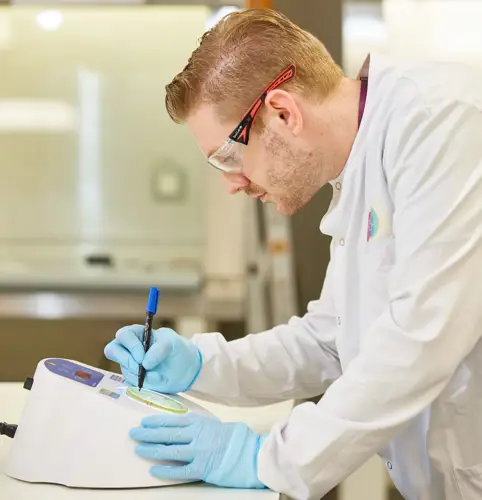
Microbiologist studying plates

Method validation


A second notable update is the clearer articulation of method suitability in the presence of product. The chapter now explicitly states that the ability of the method to detect Bcc in the tested product must be established and that this suitability should be reconfirmed whenever there is a change in testing performance or a change in the product that could affect the outcome. It also states that the incubation time used during method suitability should not exceed the shortest incubation period specified for the method. This is a subtle but important point. It prevents laboratories from compensating for poor recovery by extending incubation beyond the validated method window. Instead requires them to demonstrate genuine recovery capability under realistic test conditions. From a quality systems perspective, this reflects a stronger expectation that the test must be robust in the real product matrix, not just theoretically effective. 


Another meaningful update is the formal addition of the ‘Recommended Culture Media’ section. USP now gives explicit compositions for stock buffer solution, phosphate buffer solution pH 7.2, buffered sodium chloride–peptone solution pH 7.0, soybean–casein digest broth and BCSA. The chapter clearly notes that this section is informational and that alternative media may still be used provided their suitability can be demonstrated. This is a pragmatic change. Rather than forcing every laboratory to use a single rigid formulation, USP provides a well-defined reference point that supports standardisation while still permitting scientifically justified alternatives. For contract laboratories, multi-site manufacturers and firms managing method transfer, such compendial transparency is especially useful because it reduces ambiguity about expected baseline formulations and preparation conditions. 


Test interpretation


The chapter also sharpens the interpretation and confirmation of suspect isolates. On BCSA, possible Bcc presence is indicated by greenish-brown colonies with yellow halos or white colonies surrounded by a pink-red zone. However, USP makes clear that any growth on BCSA must be confirmed by identification testing, with a specific cross-reference to Chapter〈1113〉 Microbial Characterization, Identification and Strain Typing for additional information. This is a worthwhile update because colonial morphology alone is not sufficiently specific for final disposition decisions. By hardwiring confirmatory identification into the chapter, USP reduces the risk of false-positive conclusions and improves the defensibility of laboratory decisions during regulatory review. 


Background to the updates


Why has USP made these updates? The answer appears to be less about changing the principle of Bcc testing and more about improving consistency, reproducibility and fitness for purpose. The chapter already had a defined purpose, but earlier ambiguity around media composition, suitability expectations and interpretation could lead to variable practice between laboratories. The revised text brings greater precision to routine implementation. It also reflects the broader regulatory movement toward performance-based microbiology, where the key question is whether the laboratory can demonstrate that the method works reliably for its own product and process context. In other words, the update supports a risk-based quality mindset - use the compendial method, but prove that it is suitable, selective and scientifically controlled in your hands.


There is also a practical signal in the chapter’s continued insistence on low-level challenge inocula, specifically not more than 100 cfu for growth promotion and suitability testing. This matters because an over-challenged method may appear effective even though it performs poorly near the limit of detection. By retaining and emphasising this low inoculum expectation, USP ensures the method is assessed closer to routine reality, where low-level contamination is often the genuine concern. It also strengthens comparability across laboratories because the challenge level is constrained rather than loosely defined. 


For practicing microbiologists, the application of the revised chapter is straightforward but important. Firstly, laboratories should review their media qualification protocols to ensure they explicitly address growth promotion, inhibition and indication. Secondly, method suitability studies should be revisited, particularly for products with antimicrobial properties, surfactants, preservatives or unusual physical characteristics. USP explicitly notes that any antimicrobial activity requires modification of the procedure, with reference to neutralisation or removal approaches described in Chapter 〈61〉. Thirdly, laboratories should verify that suspect colonies recovered on BCSA are routed through a validated identification workflow rather than being interpreted morphologically alone. Finally, any local preparation of media should be checked against the newly stated informational formulations and preparation parameters. 

Summary


Overall, the latest revision to USP 〈60〉 is best seen as a maturation of the chapter. The core methodology remains familiar: pre-incubation in soybean–casein digest broth, subculture onto BCSA, observation of characteristic colony morphology and confirmation of suspect growth. What has changed is the degree of compendial precision around how laboratories should qualify media, demonstrate suitability, interpret results and justify method performance. For microbiologists, this is a helpful development.


It not only improves standardisation but also makes the method easier to defend scientifically and regulatorily. In a field where contamination events can have major patient and compliance consequences, that extra clarity is far from trivial.


References


1.    United States Pharmacopeia (USP) 〈61〉 Microbial Enumeration Tests. USP–NF. Rockville, MD: United States Pharmacopeial Convention; current edition.


2.    United States Pharmacopeia (USP) 〈60〉 Microbiological Examination of Nonsterile Products—Tests for Burkholderia cepacia Complex. USP–NF. Rockville, MD: United States Pharmacopeial Convention; 2026.


3.    Sandle T. Burkholderia cepacia complex: microbiological risks and control strategies in pharmaceutical manufacturing. Eur J Parenter Pharm Sci. 2019;24(2):52–60


Need to contact us? Get help or ask us a question