Pharmaceutical water systems require ongoing microbiological monitoring to demonstrate they remain in a validated state of control. This is a key obligation embedded across EU GMP Annex 1, the European Pharmacopoeia and FDA expectations. A loss of microbiological control can lead to product recalls, batch rejections and direct patient harm - including increased risk from water borne organisms such as Burkholderia cepacia complex and Ralstonia pickettii.
RSSL provides independent water bioburden monitoring by membrane filtration to Ph. Eur. monographs 0008, 0169 and 2249, serving pharmaceutical, biopharmaceutical, medical device and ATMP manufacturers from a GMP-compliant, MHRA and FDA-inspected facility.
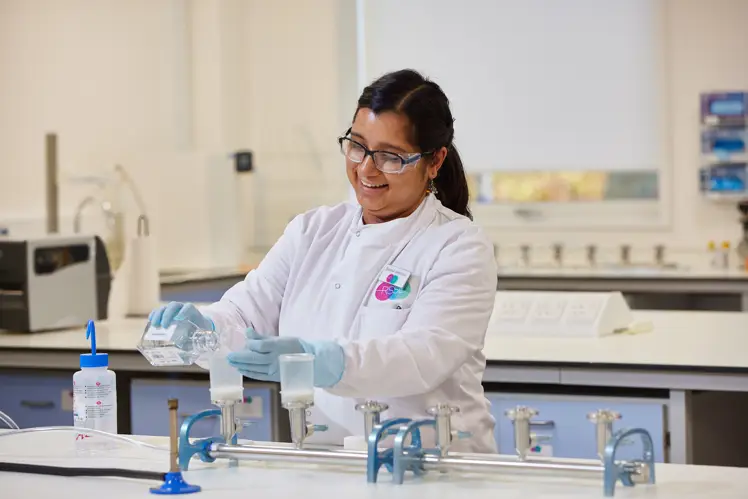
Testing is performed in our Clean Lab, physically separated from our Culture Lab to prevent cross contamination
Providing HEPA-filtered airflow to safeguard against extrinsic contamination during sample processing.
Supporting trend reporting, root-cause analysis and quality investigations
Phase II laboratory investigations and Phase III investigation support available on request.
We test pharmaceutical water samples by membrane filtration concentrating organisms from your sample onto a 0.45 µm membrane using either R2A and TSA media,
R2A
R2A is the pharmacopoeial reference medium for bulk Purified Water and WFI. We perform our testing by incubating on R2A agar at 30-35°C for a minimum of 5 days.
R2A's low-nutrient formulation recovers stressed waterborne organisms that nutrient rich media such as TSA suppress through metabolic shock.
TSA
Where your samples fall under Ph. Eur. 2.6.12 (Purified Water in Containers) or Ph. Eur. 2249 (Water for Preparation of Extracts), we use TSA as the specified medium.
| Water Grade | Monograph | Method | Medium | Incubation Conditions |
| TVC of Purified Water (bulk) | Ph. Eur. 0008 | Membrane filtration | R2A agar | 30-35 °C, ≥5 days |
| TVC of Water for Injections | Ph. Eur. 0169 | Membrane filtration | R2A agar | 30-35 °C, ≥5 days |
| TVC of Water for Preparation of Extracts | Ph. Eur. 2249 | Membrane filtration | TSA | 30-35 °C, ≥5 days |
| TVC of Potable water (purification system feed) | - | Membrane filtration | R2A agar | 30-35 °C, ≥5 days |
| Purified Water in Containers (TAMC) | Ph. Eur. 2.6.12 | Membrane filtration / pour plate | TSA | 30-35 °C, 3-5 days |
| Purified Water in Containers (TYMC) | Ph. Eur. 2.6.12 / USP <61> | Membrane filtration / pour plate | SDA | 20-25 °C, 5-7 days |
Organisms survive purification and attach to pipework surfaces
Biofilm matures, organisms proliferate through distribution network undetected
Gram-negative organisms, endotoxins, and biofilm fragments enter product water
Product recalls, Clinical infections, Facility shutdowns, Regulatory action
| Service level | Turnaround time |
| Standard | 10 working days |
| Expedited | 6 working days |
Contact us to discuss expedited scheduling for urgent batch release or investigation support.
Our water microbiology team combines pharmacopoeial method expertise with direct experience, supporting pharmaceutical, biopharmaceutical, and ATMP manufacturers.
Whether you require an OOS investigation, a system requalification, or a response to a regulatory inspection we're here to support.


Here's what we require from your samples:
| Water grade | Volume to send | Default test volume |
| Purified Water | 100 mL (200 mL if 100 mL test volume requested) | 1 mL by membrane filtration |
| WFI | 250 mL | 200 mL by membrane filtration |
| Potable water | 100 mL | 1 mL by membrane filtration (unless otherwise requested) |
Alert limits trigger awareness and plate retention; action limits trigger formal investigation.
Alert limits are early warning thresholds indicating a potential drift from normal operating conditions. When your water sample breaches the alert limit, RSSL retains the plates and contacts you to discuss the result. Action limits represent the point at which the water system is considered out of specification. When results exceed the action limit, RSSL raises an OOS investigation as standard.
RSSL performs a full Phase I laboratory investigation as standard, assessing analyst technique, media integrity, negative controls, and equipment function. If no laboratory error is identified, the confirmed result is reported and you are contacted immediately. Phase II laboratory investigations (hypothesis testing and retesting under defined conditions) and Phase III investigation support (client-side root cause analysis, CAPA proposals) are available on request.
R2A is a low-nutrient medium specifically designed to recover stressed, slow-growing, and oligotrophic organisms typical of pharmaceutical water systems. Standard nutrient-rich media such as TSA can suppress recovery of these organisms, either because faster-growing species outcompete them, or because the nutrient shock inhibits growth of organisms adapted to low-nutrient environments. R2A is the pharmacopoeial recommendation for water system monitoring and provides a more representative picture of your system's true microbial population.
Monitoring frequency depends on your system's validated state, regulatory requirements, and risk assessment. EU GMP Annex 1 requires routine monitoring at defined intervals with documented justification for the frequency chosen. Newly commissioned or requalified systems typically require intensive monitoring (daily or multiple times per week) during the qualification phase, transitioning to a reduced routine frequency once the system demonstrates consistent control. RSSL can advise on monitoring strategy as part of our technical consultancy service.
Water bioburden monitoring determines the microbiological quality of your water system at defined sample points. Microbial limit testing (MLT) determines the bioburden of your finished product or raw material. They use different media (typically R2A for water; TSA for product), different acceptance criteria, and serve different purposes in your quality system. Water monitoring asks whether your water system is in control; MLT asks whether your product meets its microbial specification.
Yes. Colonies recovered from water monitoring plates can be identified using MALDI-ToF mass spectrometry. This identification data supports trending analysis, contamination source tracking, and root cause investigation when excursions occur. Knowing which species are present in your water system, not just how many, enables targeted corrective action. Identification by genomic sequencing is available for organisms not resolved by proteomic methods.
Yes.
Bacterial endotoxin testing by kinetic turbidimetric LAL method is available for Water for Injections and rinse water samples. Endotoxin contamination in WFI systems poses a direct patient safety risk, particularly for parenteral and ophthalmic products. RSSL reports endotoxin results against your specified limit (typically ≤0.25 EU/mL for WFI per Ph. Eur.).
Submit water samples in sterile, endotoxin-free containers. Where chlorinated mains water is being tested, we recommend containers containing sodium thiosulphate to neutralise residual chlorine and prevent continued bactericidal activity during transport. RSSL can advise on appropriate container selection and transport conditions for your specific sampling requirements.
If your potable water feeds a purification system, yes. Potable water quality directly affects downstream water grades, and seasonal variations in feed water quality can challenge treatment capacity and affect purified water microbiology. We test potable water in this context using purified water methods. We do not test potable water to comply with drinking water regulations, as that requires a different scope and accreditation.


